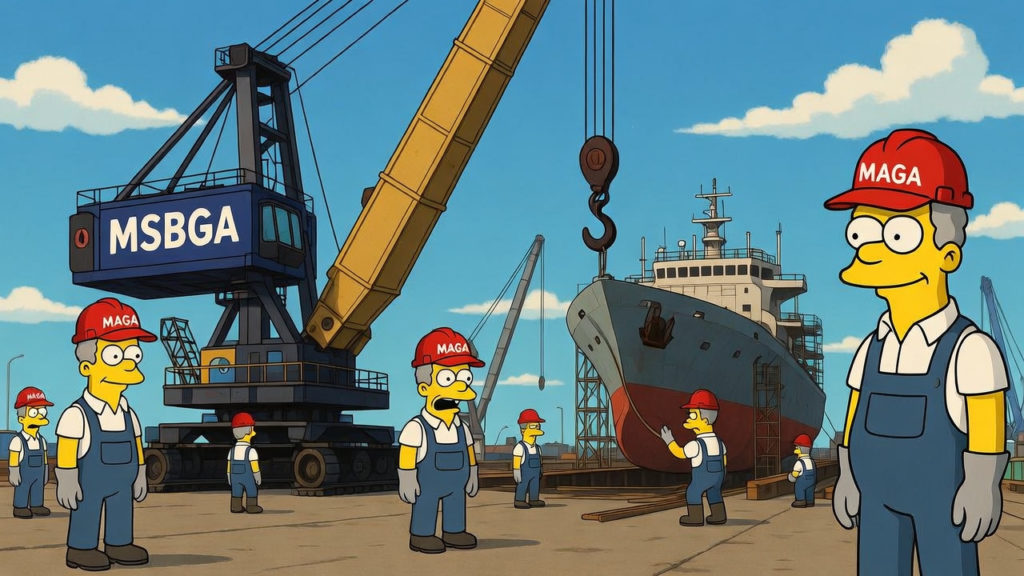
In a bold move that’s sending ripples across the international maritime community, the Trump administration has unveiled America’s Maritime Action Plan (MAP), a comprehensive strategy aimed at resurrecting the U.S. shipbuilding industry and bolstering its merchant marine fleet.
Announced on February 13, 2026, this plan addresses critical vulnerabilities in U.S. maritime capabilities, from dwindling shipyards to workforce shortages, and could reshape global trade dynamics. As professionals in the merchant navy—whether you’re a ship’s officer navigating international waters, a new entrant charting your career path, or shore-based management overseeing fleets—this development demands your attention. Here’s why it’s hot off the press and what it means for you.
The Core of the Plan: Three Pillars to “Make Shipbuilding Great Again”
The MAP, born from Executive Order 14269 signed in April 2025, outlines a three-pronged approach to revitalize America’s maritime sector: expanding commercial shipbuilding, building a resilient workforce, and strengthening alliances for economic and national security. With only eight fully capable U.S. shipyards and less than 1% of new commercial ships built domestically, the U.S. has long lagged behind global competitors like China. The plan seeks to reverse this by:
- Boosting Shipbuilding Capacity: Investments in yard upgrades, including dry docks, cranes, and AI-driven supply chain analysis, aim to scale production. Public-private partnerships, tax incentives, and new fees on foreign-built vessels entering U.S. ports could generate billions in funding. This includes mandating more American-made materials and exploring autonomous vessel technologies to modernize fleets.
- Regulatory Overhaul: To “level the playing field,” the plan proposes streamlining burdensome regulations, introducing a Maritime Security Trust Fund, and incentivizing U.S.-flagged vessels for cargo transport. A universal fee on foreign ships—potentially raising up to $1.5 trillion at higher rates—could shift market incentives toward domestic options.
- Global Alliances and Security: Emphasizing trade policies and allied coordination, the MAP aims to reduce dependency on foreign shipping, enhancing supply chain resilience amid geopolitical tensions.
White House spokesperson Anna Kelly called it “the first holistic approach to revitalizing America’s commercial maritime industry,” while a senior official noted the long-term horizon: “Implementation will require years or decades.” For the global industry, this could mean tougher competition, higher costs for non-U.S. vessels, and a push toward more sustainable, tech-forward shipping practices.
Career Boost: Expanding the Mariner Workforce
One of the plan’s most exciting aspects for aspiring and seasoned mariners is its focus on workforce development. The U.S. faces a mariner shortage, risking over-reliance on foreign crews—a vulnerability in times of crisis. To counter this, the MAP invests heavily in training and education:
- Modernizing the U.S. Merchant Marine Academy at Kings Point, New York, and supporting state maritime academies to create robust education pipelines for maritime trades.
- Launching the “Military to Mariner” program to transition former service members into merchant marine roles, leveraging their skills for civilian careers.
- Fostering bilateral agreements with allies for mariner exchanges, opening doors to international experience and knowledge-sharing.
These initiatives could create thousands of new jobs, from shipyard welders to deck officers, and elevate career prospects in the merchant navy.
How This Affects Maritime Training: A Ripple Effect Worldwide
The MAP’s emphasis on training isn’t just a U.S. story—it’s a global catalyst. By investing in academies and programs, it sets a benchmark for enhanced maritime education, potentially influencing standards in the UK and beyond. For new entrants to the merchant navy, this means more structured pathways, including apprenticeships and tech-integrated curricula focusing on AI, autonomy, and green shipping. Ships’ officers might see mandatory upskilling in emerging technologies, while shore staff could manage fleets with stricter U.S. compliance requirements.
Globally, as U.S. policies favor domestic vessels, international training programs may adapt to include U.S.-specific credentials, boosting employability. However, challenges like funding allocation and regulatory alignment could arise, urging institutions like those in Glasgow to innovate. Ultimately, this plan could democratize access to high-quality training, making maritime careers more appealing and secure in an evolving industry.
Why This Matters Now: A Call to Action for Maritime Pros
As the FY 2027 budget incorporates these requests, the MAP signals a “new maritime golden age” for America—but with implications for everyone in shipping. Whether you’re plotting your first voyage or strategizing from the office, stay ahead: monitor U.S. trade policies, invest in continuous learning, and explore opportunities in allied exchanges. The seas are changing—will you ride the wave?