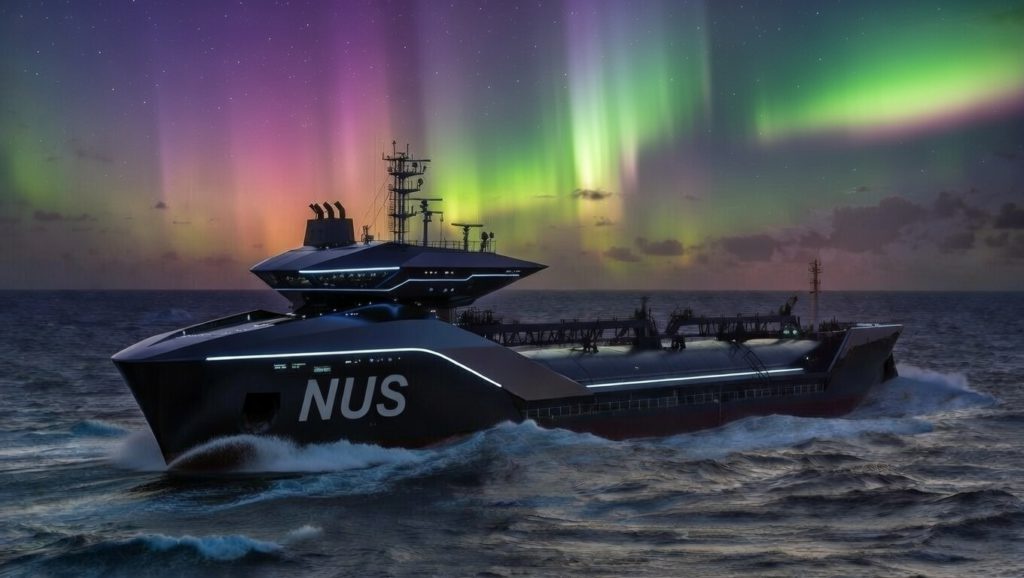
Imagine a future where massive cargo ships glide across oceans without belching out greenhouse gases, powered by a fuel that’s been around for decades but reimagined for the high seas. That future just got a major boost. On February 4, 2026, the National University of Singapore (NUS) officially launched a groundbreaking research project aimed at developing next-generation ammonia-fueled marine engines with high efficiency and near-zero emissions. This isn’t just another lab experiment—it’s a direct assault on the shipping industry’s 3% share of global carbon emissions, paving the way for sustainable merchant marine operations that could redefine your role on board or ashore.
The Innovation at the Heart of It: IRGR Technology
At the core of this three-year initiative, led by the NUS Centre for Hydrogen Innovations (CHI) and funded by the Singapore Maritime Institute (SMI), is the innovative in-cylinder reforming gas recirculation (IRGR) engine concept. Traditional ammonia engines struggle with efficiency, combustion stability, and pollutant emissions like unburned ammonia. IRGR tackles these head-on by enhancing combustion processes, slashing emissions, and boosting overall performance. Housed in a state-of-the-art lab on the NUS College of Design and Engineering campus, the project includes engine testing facilities and combustion research setups to prototype the world’s first IRGR-based engine.
This isn’t a solo effort. NUS has teamed up with heavy hitters: academic partners like Shanghai Jiao Tong University, Nanyang Technological University, and the A*STAR National Metrology Centre; industry giants such as Keppel Energy Nexus, Daihatsu (a leading marine engine manufacturer), and the American Bureau of Shipping (ABS). Their goal? Scalable engine designs that align with the International Maritime Organization’s (IMO) net-zero emissions target by 2050, making ammonia a viable, carbon-free fuel for long-haul shipping.
For ships’ officers and management, this means vessels that are not only greener but more reliable and cost-effective in the long run. New entrants to the merchant navy, take note: technologies like this are turning seafaring into a high-tech adventure, where understanding alternative fuels could be your ticket to rapid advancement.
Why Ammonia? The Big Picture for Shipping
Ammonia has long been hailed as a promising marine fuel—it’s zero-carbon when burned (if produced from renewables), energy-dense for long voyages, and already handled safely in industries like fertilizers. But adoption has been slow due to toxicity risks, requiring specialized storage and handling. With 39 ammonia-capable ships on order by late 2025 and the first deliveries expected in early 2026, the tide is turning. Engine makers like MAN Energy Solutions and WinGD are ramping up production, and IMO’s interim safety guidelines approved in December 2024 are setting the stage for widespread use.
For senior and middle-level shore staff, this spells opportunities in fleet retrofitting, supply chain management for green ammonia, and compliance with evolving regulations. The NUS project could accelerate this shift, positioning Singapore as a global hub for maritime innovation and creating ripple effects in job markets worldwide.
How This Affects Maritime Training: Gear Up for the Green Wave
The real game-changer? Training. Ammonia is toxic and corrosive, demanding a complete overhaul of crew competencies. Ships’ officers will need hands-on expertise in safe bunkering, ventilation systems, protective gear, and emergency protocols—far beyond traditional fuel handling. Companies like Anglo-Eastern are already ahead, completing pilot training for seafarers in India using LNG/Ammonia bunkering simulators as of December 2025.
For new entrants, this opens doors to specialized certifications that could fast-track careers in sustainable shipping. Expect maritime academies to integrate ammonia modules into STCW (Standards of Training, Certification and Watchkeeping) courses, focusing on risk assessment and high-tech engine management. Management teams onshore will oversee upskilling programs, potentially increasing costs but also enhancing safety and efficiency. As one expert notes, “Switching to ammonia is more than a technical upgrade—it’s a people process.” By 2026, with the first ammonia-fueled vessels sailing, those trained in these technologies will be in high demand, turning environmental challenges into career goldmines.
Charting the Course Forward
The NUS IRGR project isn’t just tech talk—it’s a clarion call for the merchant marine to embrace sustainability without sacrificing performance. Whether you’re navigating from the bridge, starting your seafaring journey, or strategizing from the office, this development signals exciting times ahead. Stay tuned to Glasgow Maritime for more on how innovations like this are reshaping our industry. What’s your take—ready to train for the ammonia era?