- by
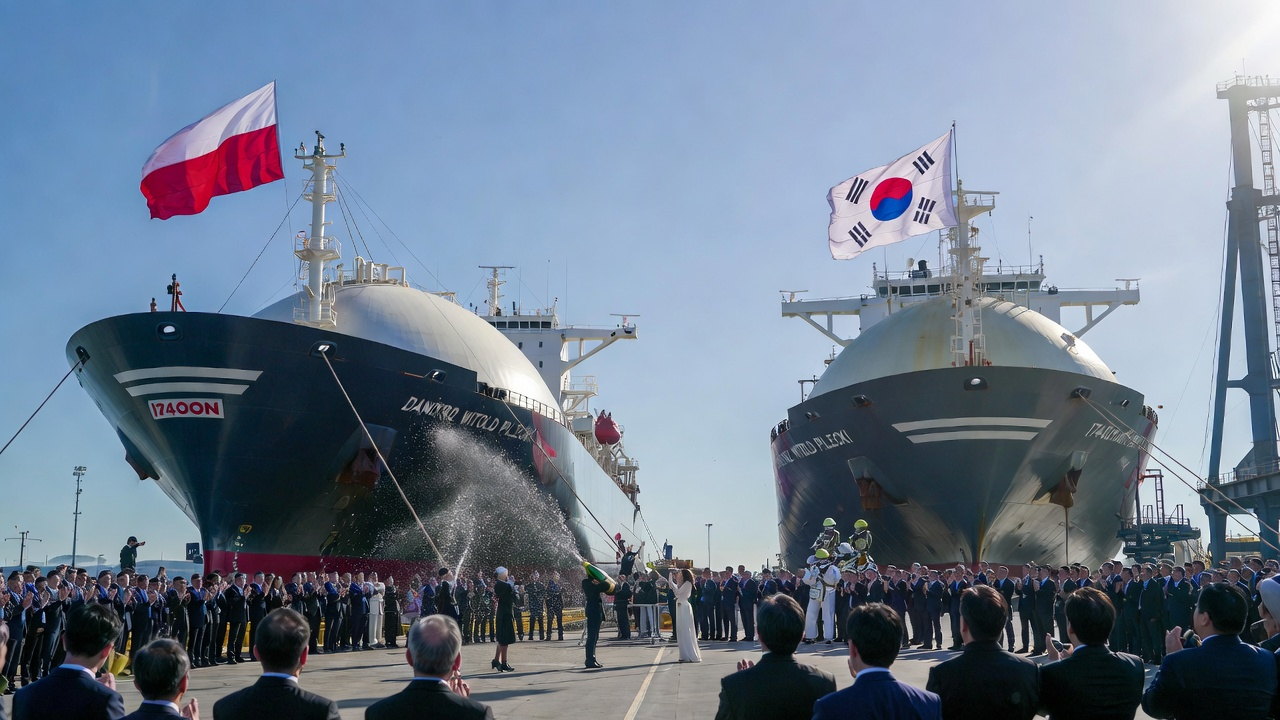
In a major step forward for global energy transportation and Europe’s push for reliable LNG supplies, Poland’s Orlen Group has taken delivery of two state-of-the-art 174,000 cubic meter LNG carriers built by Hanwha Ocean shipyard in South Korea. The naming ceremony took place recently (announced March 16, 2026), with these vessels set to enhance Poland’s and the region’s energy security by providing greater flexibility and stability in gas deliveries.
Each carrier boasts advanced design features for efficient, low-emission operations, capable of delivering enough LNG in a single voyage to supply up to two million households. This expansion directly supports Orlen’s strategy to strengthen its position as a key LNG importer amid ongoing geopolitical energy challenges.
For ships’ officers and crews, this means assignments on modern, high-spec LNG vessels with sophisticated cargo systems, reliquefaction plants, and enhanced safety features for cryogenic operations. Expect rigorous focus on handling boil-off gas, maintaining cargo temperatures, and precise maneuvering during loading/discharging at terminals—skills that demand precision and constant vigilance.
New entrants to the merchant navy (cadets and junior officers) should see this as a golden opportunity: LNG shipping remains a high-demand, well-paid niche with strong job security. Companies like Orlen and partners are likely ramping up recruitment and sponsorships for specialized training paths. Starting with LNG endorsements on your certificates could fast-track you into rewarding careers on these premium vessels.
Shore-based senior and middle level management in shipping companies will note the broader implications: this delivery signals continued investment in LNG infrastructure despite market volatilities, driving demand for long-term charters, fleet optimization, and compliance with evolving emissions standards. It reinforces the shift toward cleaner energy carriers, prompting reviews of portfolio diversification, crew training budgets, and partnerships with yards like Hanwha for future newbuilds.
How This Latest Development Affects Maritime Training
The arrival of these advanced LNG carriers accelerates the need for specialized training across the board:
- Intensified LNG-specific modules in STCW courses, covering cargo operations, emergency response to gas leaks, inert gas systems, and cryogenic safety—beyond basic tanker familiarization.
- Expanded simulator training for realistic LNG handling scenarios, including reliquefaction failures, terminal interfaces, and adverse weather berthing.
- Greater emphasis on energy efficiency and low-emission practices in navigation and engineering curricula, aligning with IMO goals and vessel designs like these.
- Company inductions and refresher programs will incorporate real-world case studies from new deliveries, boosting competence in high-value LNG trades.
This is prime time for upskilling—LNG expertise opens doors to stable, high-earning roles in a growing sector. Congrats to the crews and teams involved; safe voyages ahead.
Stay sharp and keep advancing your skills at sea and ashore.