- by
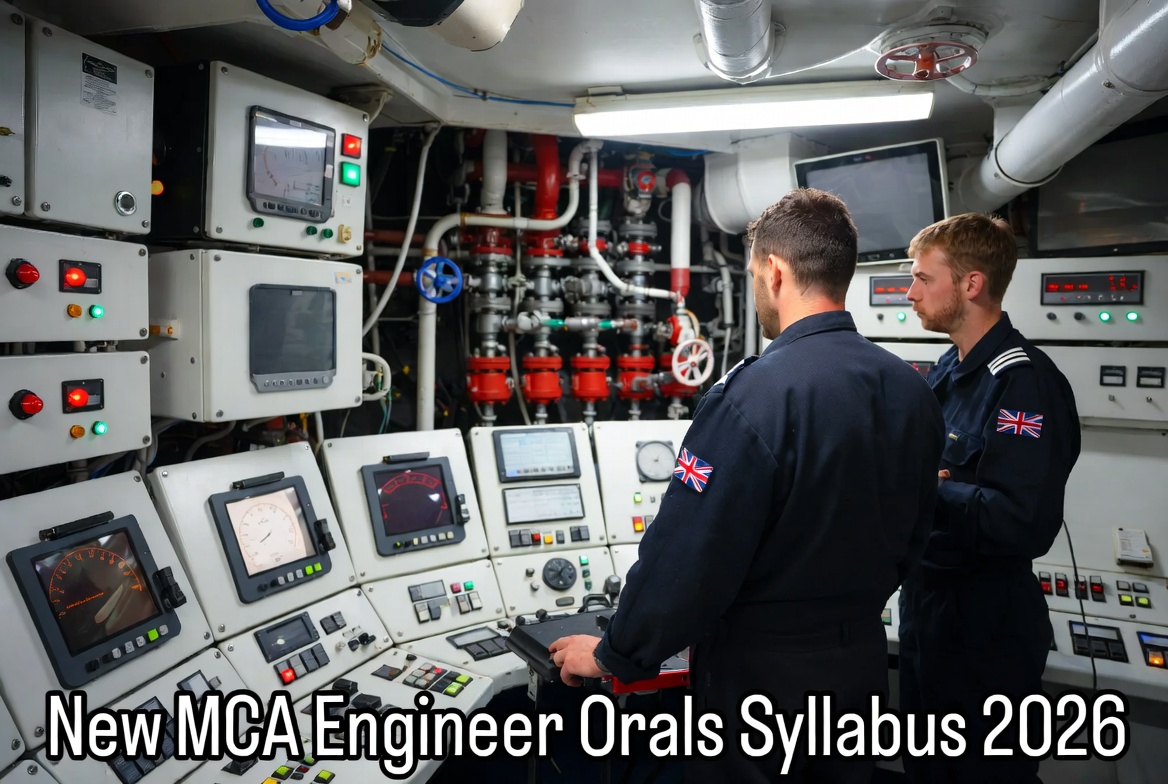
At Glasgow Maritime Academy, we help marine engineers prepare for their MCA Certificates of Competency, and the oral examination remains one of the most critical—and sometimes daunting—steps. The Maritime and Coastguard Agency (MCA) has updated the Engineer and Electro-Technical Officer Oral Exam Syllabus through MIN 654 (M) Amendment 1, published in April 2026. This notice extends the previous syllabus (with no major feedback-driven changes after the initial rollout) until 1 May 2027.
This update replaces the older MGN 69 and provides clear, structured guidance for Engineer Officer of the Watch (EOOW), Chief and Second Engineer, and Electro-Technical Officer (ETO) oral exams.
Why the Syllabus Matters
The MCA oral exam assesses not just theoretical knowledge but your ability to apply it in real-world scenarios. Examiners evaluate how you handle routine operations, emergencies, resource management, safety, and environmental protection from the perspective of your certificate level. The syllabus maps directly to STCW Convention requirements, ensuring you demonstrate competence for safe ship operations.
Key Sections in MIN 654 (M) Amendment 1
1. Engineer Officer of the Watch (EOOW) – STCW Reg III/1
Focuses on operational-level duties for ships of 750 kW or more propulsion power.
Main Competences Include:
- Maintaining a Safe Engineering Watch — Watch handover procedures, log keeping, routine duties at sea/anchor/port, changeover from remote to local control, immediate actions for breakdowns, fire, flooding, or accidents.
- Operating Main and Auxiliary Machinery — Working principles, preparation for sea, fault recognition, pumping operations (bilge, ballast, fuel, etc.), boiler management (if applicable).
- Engine-Room Resource Management — Allocation of tasks, communication, leadership, assertiveness, and team dynamics.
- Safety, pollution prevention, emergency procedures, and basic legislative awareness.
Candidates without steam boiler experience may have limitations noted on their CoC.
2. Chief Engineer & Second Engineer (Common Syllabus) – STCW Reg III/2 & III/3
This builds on EOOW topics with a stronger emphasis on management-level responsibilities.
Key areas:
- Operate, test, and maintain marine engineering systems (diesel engines, steam, auxiliaries, etc.).
- Electrical, electronic, and control systems.
- Planning and scheduling maintenance and repairs.
- Detecting and correcting machinery malfunctions.
- Trim, stability, stress, and ship handling from an engineering perspective.
- Legislative requirements (ISM, MLC, MARPOL, SOLAS, etc.).
- Personnel management, emergency situations, and damage control.
- Safety and security of the vessel, crew, and environment.
The examiner expects you to demonstrate leadership and decision-making suitable for running the engineering department.
3. Electro-Technical Officer (ETO)
Covers specialised electrical, electronic, and control engineering at the operational level, including maintenance, repair, safety, and integration with ship systems.
What’s New or Emphasised in the 2026 Update?
- The core structure remains stable following the initial rollout, with the extension confirming the syllabus works well in practice.
- Stronger integration of STCW principles for engineering watchkeeping (Annex A in the MIN).
- Emphasis on scenario-based questioning: Examiners probe with “what if” situations to test anticipation, reaction, and practical application.
- Clear mapping to competence tables, criteria for evaluation, and further guidance for examiners and candidates.
- Continued focus on English language proficiency, pollution prevention, and modern ship systems (automation, controls).
No radical overhaul, but the document provides clearer expectations and examples of how questions are structured.
Preparation Tips from Glasgow Maritime Academy
- Know the Syllabus Inside Out — Download MIN 654 Amendment 1 directly from the MCA website and cross-reference with your underpinning knowledge (HND/Foundation Degree + ancillary courses).
- Practice Scenarios — Orals are conversational. Prepare for open-ended questions starting with watch handover, emergencies, or machinery faults, then build detailed responses.
- Mock Orals — Our dedicated EOOW, Class 2, and Chief Engineer Orals Prep courses include realistic mock boards with experienced examiners.
- Stay Current — Review recent MAIB reports, ISM audits, and common failure points like bilge management, fuel changeover, or generator paralleling.
- Technical + Soft Skills — Demonstrate leadership, communication, and safety-first mindset alongside technical expertise.
Ready to Pass Your Engineer Orals?
Whether you’re preparing for EOOW, Class 2, Chief Engineer, or ETO, our courses at Glasgow Maritime Academy are tailored to the latest MCA requirements. We offer focused classroom and practical sessions to build confidence and competence.
Contact us today to book your oral prep course or discuss your Notice of Eligibility (NOE). Let’s get you ready for success at sea!
This blog is based on official MCA guidance (MIN 654 Amendment 1, April 2026). Always check the latest documents on gov.uk for any updates.