- by
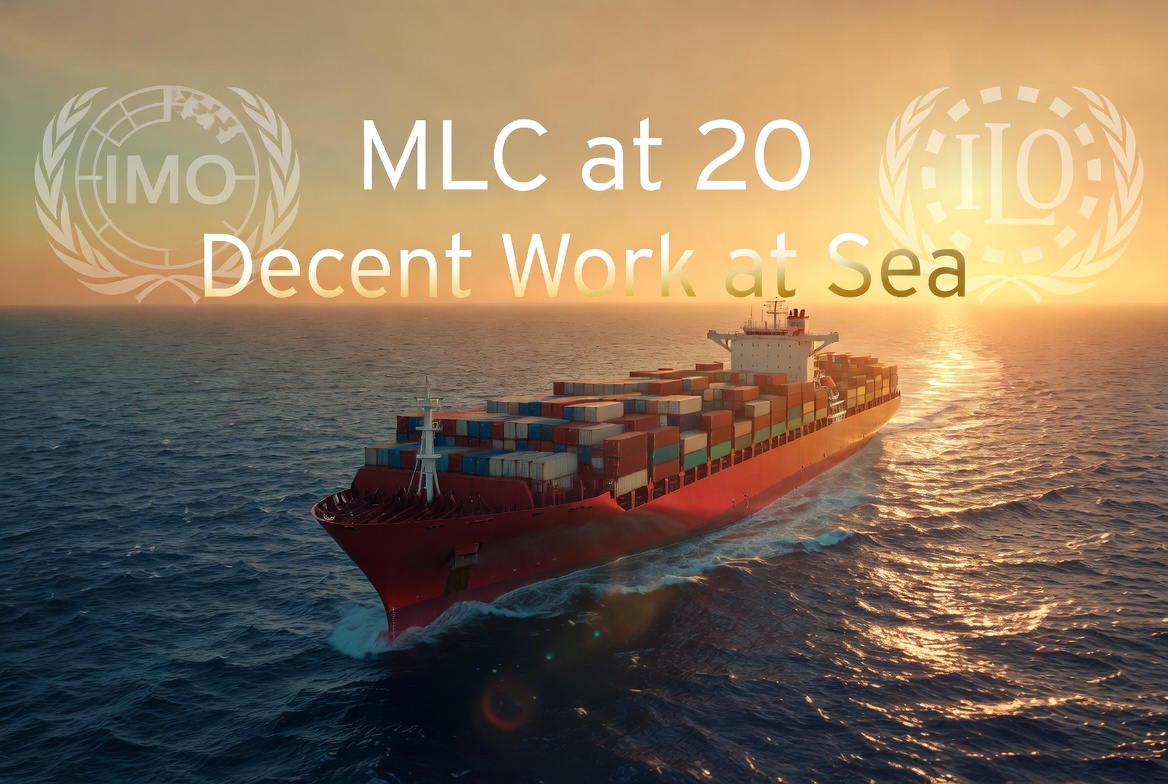
Hot off the press today – exactly 20 years after its adoption on 23 February 2006 – the ILO and IMO have issued a powerful joint statement reaffirming global commitment to decent work at sea under the Maritime Labour Convention (MLC, 2006).
For the 1.9 million seafarers who keep 90% of world trade moving, this isn’t nostalgia. It’s a loud, clear signal that your rights, your welfare, and your career stability are non-negotiable.
Scroll-stopping reality check: Whether you’re a Chief Officer chasing your first command, a cadet about to join your first ship, or a fleet manager responsible for compliance and crew retention – the MLC directly impacts your paycheck, your rest hours, your medical care, your shore leave, and even how long you stay in this industry.
What the MLC Actually Delivered in 20 Years
- Enforceable minimum standards on wages, hours of work/rest, accommodation, food, health protection and social security
- A “level playing field” that punishes sub-standard operators and protects responsible shipowners
- Strong inspection & certification system that has dramatically reduced abandonment cases and unfair competition
During COVID-19, the Convention proved its worth by designating seafarers as key workers – yet challenges remain: fatigue, criminalisation, denial of shore leave, unpaid wages, and the growing mental-health crisis at sea.
Today’s joint ILO-IMO statement is crystal clear: “The MLC, 2006 is a living instrument… We call on all States and industry stakeholders to uphold its standards, strengthen compliance and work in partnership to guarantee seafarers’ rights and promote a fair, inclusive and sustainable future for global shipping.”
How This Latest Development Directly Affects Maritime Training in 2026
The anniversary lands at the perfect moment – just weeks after key STCW amendments (1 Jan 2026) made mandatory training on preventing harassment and bullying (including sexual harassment) compulsory for all seafarers.
For new entrants & cadets Your initial training now includes dedicated MLC modules on rights, welfare, and complaint procedures from Day 1. Glasgow Maritime’s updated cadet programmes already embed these – so you graduate not just competent, but confident in standing up for yourself and your crewmates.
For serving ship officers Expect more frequent refresher courses focusing on: • Fatigue risk management & proper rest-hour recording • Leadership in positive shipboard culture • On-board MLC compliance audits (Port State Control loves these) • Handling harassment reports professionally
These are no longer “nice-to-have” – they are career protectors. Officers who master them get promoted faster and retain better crews.
For senior & middle-level shore management Fleet managers and HR teams must now ensure: • Full MLC certification on every vessel • Robust welfare policies that survive Port State Control inspections • Training records that demonstrate due diligence (avoids multimillion-dollar fines and detentions)
Bottom line: Better-trained crews = lower turnover, higher safety scores, stronger commercial performance.
What You Should Do Right Now
- Check your own ship’s MLC Declaration of Maritime Labour Compliance – is everything current?
- If you’re shore-side, review your company’s MLC training matrix – 2026 audits will be stricter.
The message from ILO & IMO today is simple: Decent work at sea is not optional – it is the foundation of a sustainable, resilient shipping industry.
At Glasgow Maritime we’ve been preparing professionals for exactly this future for years. The MLC at 20 just made that preparation even more valuable.
Stay safe, stay compliant, keep sailing.