- by
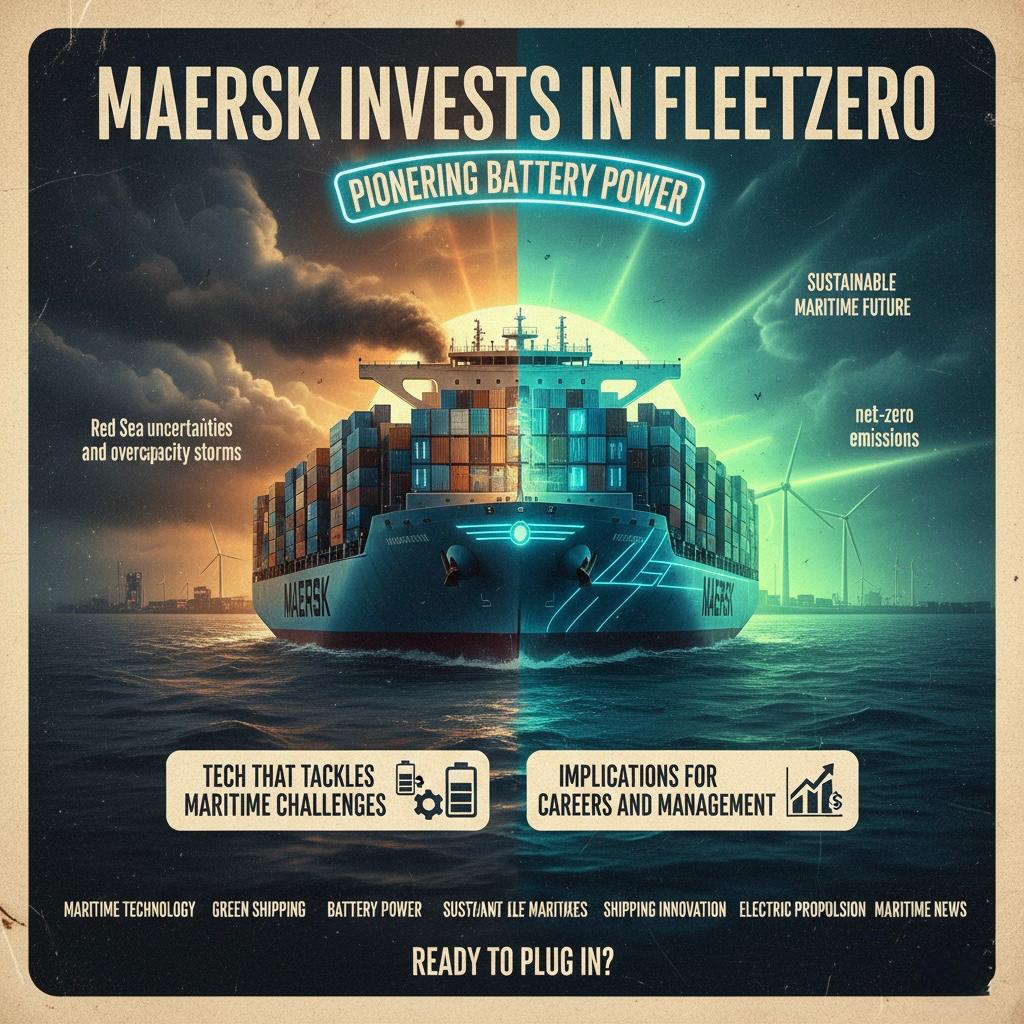
In a groundbreaking move that’s set to electrify the shipping world, Maersk has thrown its weight behind Houston-based startup FleetZero, signaling a major shift towards hybrid and electric propulsion in commercial shipping. Announced just yesterday on January 18, 2026, this investment is part of a $43 million Series A funding round that could redefine how we power vessels, cut emissions, and navigate the path to net-zero. For ship officers battling fuel costs, new entrants eyeing green careers, and shore-based managers strategizing for regulatory compliance, this is the kind of innovation that demands attention—could this be the spark that transforms your next voyage?
The Big Backing: Maersk and a Star-Studded Investor Lineup
FleetZero, a dynamic startup founded by mariners and engineers with deep industry roots, is developing advanced hybrid and electric powerplants tailored for commercial ships. Their vision? Not just cleaner engines, but fully robotic vessels enabled by high levels of automation and autonomy. This isn’t pie-in-the-sky tech—it’s practical, with a focus on containerized battery systems that address real-world challenges like energy density and safety.
The funding round attracted heavy hitters, including Bill Gates’ Breakthrough Energy Ventures, Twitter founder Evan Williams’ Obvious Ventures, and Japan’s MOL Plus VC, among others. Maersk’s involvement comes via its Maersk Growth arm, underscoring the giant’s commitment to electrification. As Morten Bo Christiansen, Head of Energy Transition at A.P. Moller-Maersk, put it: “We believe that electrification will be an important part of the mix on our journey to reach net-zero. Their ambitions that go from battery technology to broader infrastructure make them a great partner for Maersk.”
This isn’t just capital—it’s a vote of confidence in FleetZero’s claim that hybrid and electric options offer a lower total cost of ownership (TCO) than traditional powerplants. CEO Steven Henderson boldly states that electrification is “inevitable,” citing reduced maintenance and operational efficiencies that could slash costs for operators.
Tech That Tackles Maritime Challenges Head-On
At the heart of FleetZero’s innovation are modular, containerized batteries designed in collaboration with the American Bureau of Shipping (ABS). This partnership ensures rigorous safety standards, testing, and class approval, overcoming key barriers like energy density compared to conventional fuels. ABS Vice President Michael Kei highlighted the focus: “The next step is overcoming key barriers to deployment, most notably the constraints of energy density compared to conventional fuels and the associated safety challenges. We are proud to join FleetZero in this effort to explore new approaches with safety as our guiding principle.”
For the shipping industry, this means vessels that run cleaner, quieter, and cheaper. Imagine hybrid systems that reduce fuel consumption on long hauls, or fully electric setups for short-sea routes—perfect for complying with tightening IMO carbon rules and EU emissions trading schemes. It’s tech that aligns with global sustainability goals, potentially lowering your vessel’s carbon footprint while boosting efficiency.
Implications for Careers and Management in the Merchant Navy
This development isn’t just about engines; it’s about opportunities. FleetZero is building a manufacturing hub in Houston with an initial capacity of 300 MWh per year, scaling up tenfold within five years. This taps into local industrial expertise, creating jobs in battery production, automation, and green engineering—ideal for new entrants to the merchant navy looking to specialize in sustainable tech.
Ship officers, get ready: Operating these systems could mean mastering new skills in energy management and autonomy, turning routine watches into high-tech oversight. For senior and middle-level shore staff, it’s a strategic edge—investing in such tech could future-proof fleets against overcapacity woes and regulatory risks, as highlighted in recent Allianz surveys. With shipping bracing for losses due to supply-demand imbalances in 2026, innovations like this offer a lifeline through cost savings and differentiation.
As Andrew Beebe from Obvious Ventures noted, FleetZero’s team “are mariners and engineers, know the industry deeply, and are scaling with real ships and customers, not just renderings.” This real-world approach ensures the tech hits the deck running.
Charting the Course Ahead
Maersk’s bet on FleetZero is more than an investment—it’s a beacon for the merchant marine’s green revolution. As we sail into 2026 amid Red Sea uncertainties and overcapacity storms, embracing electrification could be your competitive advantage. Whether you’re on the bridge, in training, or calling the shots from shore, stay tuned: the future of shipping just got a powerful charge.