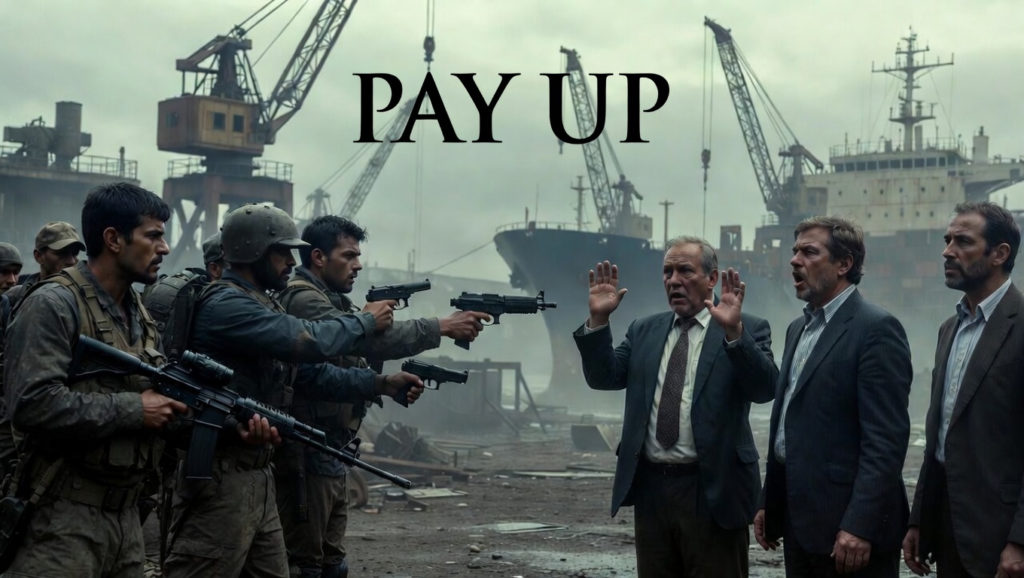
Two days ago, on 27 March 2026, the Islamic Revolutionary Guard Corps (IRGC) unilaterally opened a “tolled passage” through the Strait of Hormuz.
Merchant vessels can now transit – but only after paying what amounts to a protection fee. Those who refuse are left with the choice of waiting indefinitely or rerouting around Africa, adding up to three weeks and millions in extra fuel and charter costs.
Transit is trickling through. Insurance markets are repricing in real time. And every shipping company with tankers, bulkers or containerships in the Gulf is rewriting its voyage orders tonight.
This isn’t a theoretical risk assessment. It’s the new operating environment for thousands of officers on watch right now.
Why This Changes Shipping Operations Overnight
The Strait of Hormuz carries 21% of global seaborne oil and a huge slice of LNG. With the IRGC now acting as gatekeeper, owners face immediate decisions: pay the toll and accept the precedent, absorb massive war-risk premiums, or divert via the Cape – blowing schedules and budgets.
For senior and middle shore management this means urgent recalculations on fleet utilisation, contract penalties, and customer communications. Middle East–Europe and Middle East–Asia routes are already seeing spot rates surge as capacity tightens.
The message from the market is blunt: the cheapest route just became the most expensive.
What This Means for Ships’ Officers & New Entrants
Masters and chief officers on vessels approaching the Gulf are now making real-time calls that directly affect company P&L and crew safety: accept the toll, divert, or hold position and wait for owner instructions.
New entrants joining tanker or bulker fleets will see their first contracts potentially involving these exact decisions far earlier than previous generations ever did. The romantic “blue-water” passage is now layered with geopolitical chess moves that can turn a routine voyage into a high-stakes negotiation at sea.
The officers who stand out will be those who can read the risk picture, communicate clearly with shore teams under pressure, and keep crews calm when the horizon looks uncertain.
How This Latest Development Will Transform Maritime Training
The IRGC toll announcement is the latest proof that geopolitical risk is now a daily operational reality, not an occasional exam question.
Glasgow Maritime and every forward-thinking academy must accelerate:
- Real-time geopolitical scenario training – live exercises using current Strait of Hormuz data, toll negotiation simulations, and diversion planning under commercial pressure.
- Updated passage planning modules – mandatory inclusion of economic warfare, toll risks, and alternative routing calculations that balance time, cost and insurance.
- Enhanced bridge resource management in contested waters – focus on decision-making when owners, flag states and insurers are pulling in different directions.
- War-risk and hybrid threat refreshers – covering both physical security and the new economic coercion tactics now being deployed.
- Accelerated senior officer endorsements – short, sharp courses for serving masters and chief mates so they can return to the ship with the latest risk protocols before their next Gulf rotation.
Cadets who train on yesterday’s risk models will find themselves under-prepared the moment they step on the bridge. Shore teams that don’t insist on proof of this updated competence will face higher premiums and slower response times when the next curveball hits.
The ships are still moving. But the rulebook just changed mid-voyage.